Posted on Leave a comment

REVIEW: Choir Boy – Stratford East

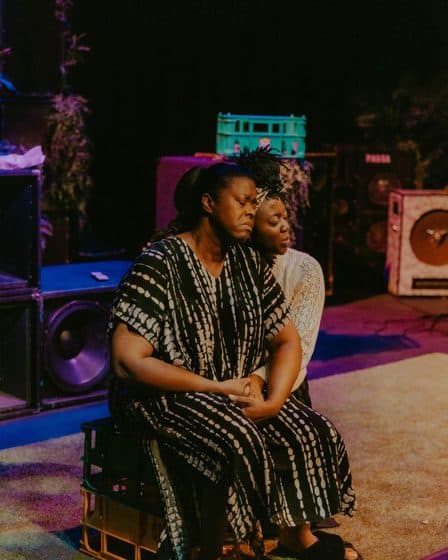
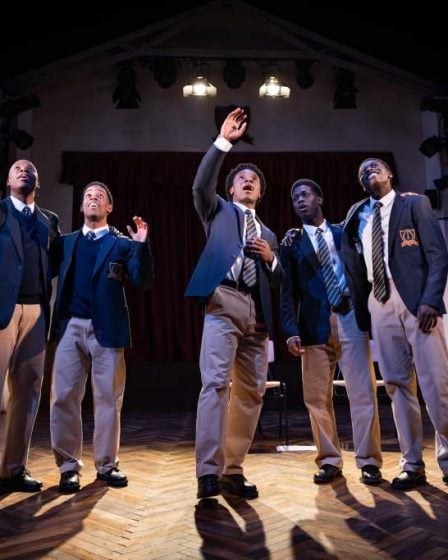
🎭Choir Boy
📍Stratford East
⭐⭐⭐⭐⭐

The story

Set in the prestigious Charles R. Drew Prep School for Boys, Tarrell Alvin McCraney’s coming-of-age drama follows five young Black men as they navigate masculinity, sexuality, identity, and the pressures of belonging within a rigid, traditional institution.

The show focuses on the school’s choir lead, Pharus (Terique Jarrett), a gifted singer and young queer man who carries himself with pride. However, following an incident in which a fellow student hurls homophobic slurs at Pharus, we see his confidence falter, and the dynamics among the students shift. The characters have intense conversations, debates, and even confrontations, questioning things like their legacy, beliefs and their belonging at the school.

With gospel hymns, creative direction and thought-provoking dialogue, Choir Boy is a beautiful, candid exploration of Black queer masculinity.

My thoughts

 I must begin by applauding the flawless acapella performances by the incredible cast. With musical direction & arrangement by Femi Temowo, the cast performs gospel and spiritual hymns throughout the play. The blend of harmonies was remarkable, capturing our attention right away. Music has always been used as a way to express ourselves. In Choir Boy, I enjoyed how each character was given the space to convey their unspoken emotions, be it frustration, hurt, joy, or guilt, through movement and music.

There is a tense debate among the students about the meaning of spirituals, the songs by enslaved African Americans. The characters hold differing views on whether the music helped their ancestors find routes to freedom or if it was used as a way to survive. McCraney examines the historical and cultural significance of the spirituals and what it means to the character’s own identity and faith.

Directed by Nancy Medina, the production has a simple, wooden set design (Max Johns), with smooth transitions between the various locations within the school. This simplicity allows us to focus fully on the characters and their stories.

Terique Jarrett is superb in the role of Pharus. Jarrett showcases great comic delivery while also blessing the stage with his powerful voice. He expertly captures the duality of a young man who refuses to let bullies shrink his personality, while also portraying a vulnerable character who carries hurt, and is often in defence mode (his clapbacks were super quick!). In a scene with Headmaster Marrow (Daon Broni), Pharus’s face visibly lights up as he speaks about what the choir means to him. We see just how much singing serves as escapism for Pharus within an environment that tries to confine him. This was an interesting connection to the earlier discussion about spirituals and their meaning.


Michael Ahomka-Lindsay is a standout as David, whose vocals stunned the entire audience. His solo genuinely left me with goosebumps! Ahomka-Lindsay portrays David with soft and quiet determination. An aspiring pastor, we witness the pressure David faces as the first in his family to attend such a prestigious school. Rabi KondĂ© delivers a compelling performance as Bobby, the headmaster’s nephew, whose bigotry is mixed with grief for his mother. Khalid Daley brings an abundance of charisma to JR, who is struggling academically yet still carries this optimistic energy. Freddie MacBruce plays AJ, Pharus’s roommate, who often supports Pharus. AJ is played with a calm presence and a hint of cheekiness. I adored their conversations as both characters portrayed a genuine, fun friendship.

The parallel phone calls scene subtly highlights the contrasts between the characters’ lives at home – the different expectations and relationships with their family. There’s intimate movement direction (Ingrid Mackinnon) with the characters leaning on or holding one another up. One poignant scene sees the students physically support a grieving Bobby, and it was honestly a powerful display of brotherhood.

Choir Boy brilliantly explores the intersection of Black masculinity, sexuality, faith and how this manifests in the young men. The play acknowledges the courage it takes to be open and have self-acceptance. McCraney crafts nuanced characters, and the script feels incredibly authentic. Paired with Medina’s expressive direction, the chemistry between the actors is outstanding. The playful banter and sharp comebacks add so much humour, but also make their relationships feel real. 

With exceptional performances, beautiful music and wonderful writing, Choir Boy is a fantastic piece of theatre that I won’t forget! 

Choir Boy is playing at Stratford East until 25 April!

Posted on Leave a comment

REVIEW: Limp Wrist and The Iron Fist – Brixton House

🎭 Limp Wrist and The Iron Fist
📍Brixton House
đŸŽŸïž Gifted
⭐⭐⭐⭐⭐

After a sold-out run during the 2024 Housemates Festival, Emmanuel Akwafo’s Limp Wrist and The Iron Fist has returned! The debut play is a captivating, funny and unflinchingly honest exploration of black queer identity.

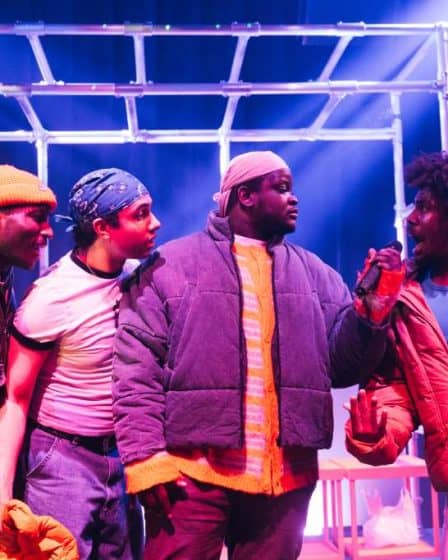
Set in London, the play follows 4 friends, Monday, Omari, Nathaniel and Joseph, as they prepare for a night out! As they wait at a bus stop, dancing, bantering and drinking miniature bottles of alcohol, deeper conversations unfold. The group embark on a journey of discovery and healing, as they open up about their sexuality, faith, and masculinity in a society that often tries to silence them.

Photo by Helen Murray

Akwafo’s play is beautiful and authentic, particularly as it draws upon personal experiences, which makes it feel profoundly human. The writing includes plenty of witty and laugh-out-loud scenes, especially the dialogue between the characters. The show balances this with moments of vulnerability and hard-hitting revelations. The show sensitively handles its heavy themes, exploring how sexuality intersects with race, religion and masculinity. We are reminded that Black people and their experiences are not a monolith. The play is also a testament to the fact that Black queer stories can be joyful, complex and full of heart.

The talented cast, Prince Kundai, Romeo Mika, Tyler Orphé-Baker and Noah Thomas, showcased palpable chemistry. The dialogue was natural and truly captured the essence of friendship as they banter, bicker and support each other.

The production boasts a strong creative team. Nathaniel Campbell’s exuberant direction kept us fully engaged and the energy high. Especially when the cast jumped, climbed and vogued around the set. It worked well to highlight the characters’ playfulness. Pierre Flasse’s sound design featured harrowing echoes from the character’s past, while Jahmiko Marshall’s atmospheric lighting perfectly set the scenes. The warm, golden brown lighting during the sequence about Black nightlife was captivating. Paired with Annie-Lunnette Deakin Foster’s slick movement direction, this created a beautiful and liberating scene.

Photo by Helen Murray

Each character delivers a powerful and thought-provoking monologue about their experience, from religion, family expectations, to mixed heritage and coming out. ‘Limp Wrist and The Iron Fist’ recognises individuality and reminds us that these men are not defined by a single identity. The cast shine in their own way; from OrphĂ©-Baker’s warmth and optimism, to Thomas’s cheeky humour. Kundai brings an intense, almost ‘tough love’ attitude. Romeo Mika stands out as Joseph, the group’s newly ‘out’ friend, who sparks conversations with historical facts and dictionary definitions. Mika’s performance is pure and effortlessly charming, which makes a later revelation even more heartbreaking.

Photo by Helen Murray

I wish there were a slightly longer runtime to add depth to each character’s journey, and also the room for the audience to reflect. Still, Limp Wrist and the Iron Fist remains a powerful, unapologetically Black and queer story. It celebrates friendship and encourages us to embrace our full, authentic selves.

Brixton House continues to be an important space for platforming real stories and lived experiences from underrepresented communities.

Limp Wrist and The Iron Fist is not one to miss – you can catch it at Brixton House until 29 November.

Posted on Leave a comment

INTERVIEW: Not Your Superwoman – Emma Dennis-Edwards, Letitia Wright and Golda Rosheuvel

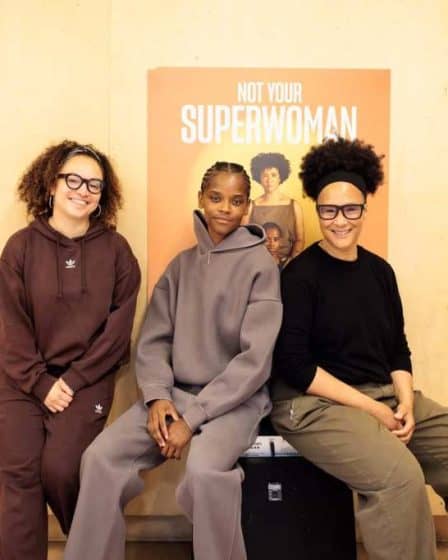
Emma Dennis-Edwards’ powerful new play, Not Your Superwoman, heads to Bush Theatre for its world premiere. Directed by Lynette Linton, the play explores the emotional aftermath of a family matriarch’s death. Acclaimed actors, Golda Rosheuvel and Letitia Wright, portray mother and daughter, Joyce and Erica, who find themselves grappling with uncertainty and inherited patterns. 

I had the wonderful opportunity to attend the rehearsals and discover more about the play. I met with playwright Emma Dennis-Edwards, Golda Rosheuvel and Letitia Wright to talk about the play, inspirations and why they believe people should see the show!

What inspired you to create a play about intergenerational dynamics?

Emma: When Lynette and I were talking about doing something around Black women and mental health, I was thinking, how many of my Black women friends are seeing therapists and unlocking some of the ancestral nature of the trauma that we’re carrying as Black women. A lot of that comes from those maternal relationships. I really wanted to do something that looks at that dynamic.

I think quite a lot of the Black British cannon, rightfully so, focuses on fatherhood and I was like ‘let’s really talk about the mums, about those relationships. That’s where the intergenerational idea of creating this play came from.’

Emma Dennis-Edwards (photo by Tyler Fyose)

Did you face any challenges when writing such an intimate, emotionally charged story?

Emma: Yeah. The Caribbean in me is like, â€˜why you chatting my business?’. This is the most personal piece of work that I’ve done in my career. Also, there’s a responsibility – because in that room with Golda, Letitia and Lynette, we’ve shared and brought quite a lot. There’s a level of responsibility because I’m holding their stuff as well within this play.

I was talking to our dramaturg, and felt I put too much of myself [in the play]. But it’s fine – it’s a shared story, it’s our story, a story for us, by us.

You’re known for powerful, screen performances. What excited you about returning to the stage?

Golda: What it speaks to. The people involved. I was looking for something I was interested in exploring – mental health, trauma, especially in the guise of Black women. I’ve been sent a lot of plays, but they didn’t speak to me.

What’s important in this project is the people involved in it. Talking and engaging with Lynette Linton’s excitement and enthusiasm for telling Black stories is something that drew me to this play, and this building and this project. I hadn’t seen one single word on the page, but through discussions and joint understanding of storytelling, and the need for Black stories to be put on stage, I was in, 100%.

Golda Rosheuvel and Letitia Wright (photo by Tyler Fyose)

Letitia: Film is good, you have maybe 2 weeks, a month to prep and learn your character. In theatre, it’s hard. You need to know the full play, all the beats, the moments, props. It’s a completely different ball game. I love both, but the difference is what’s required of you.

Theatre is like, you’re right there, I can’t hide, you’re going to see everything, feel everything, hear everything. It’s exciting! Once the stage lights go green, you’re just on. Anything can happen, you want the best to happen – you can laugh at different things and moments. The objective is always the same – whether it’s film, or TV, or theatre – is just to tell the truth. To leave something of purpose in our work.

Letitia on how she relates to the show and character, Erica:

Letitia: I wanted to do something about Black women, mental health and traumas. A play that we can all relate to. Especially the whole concept of not being a superwoman. That whole concept that plagues us, we wanted to dissect it and see what that looks like. I relate with the characters and the themes a lot.

For the first time, there is a play where I don’t have to imagine myself in a situation. Maybe there are a few elements I haven’t gone through, I won’t share, but you will discover it when you come to see the play. but everything else in the play I’ve lived it, I’ve experienced it, I know what it feels like. I relate to it a lot. I hope that other women relate to it too and feel healed once they’ve seen it.

Lynette Linton and Golda Rosheuvel (photo by Tyler Fyose)

What would you like audience to take away from the show?

Emma: Healing and healing parts of yourself. I mean, it’s one of the harshest lessons a Black woman you come to. I’ve got to really find that peace, that healing, all that stuff, myself in a world that is not set up for us to do that. I hope this play offers that.

Before we wrapped up, I asked some quick-fire questions:

Describe the show in 3 words

Emma: Funny, Black, Caribbean!
Golda: Buzzy, emotional and epic!
Letitia: Passionate, healing, hilarious!

What was the first show that made you fall in love with theatre?

Golda: Probably The Nativity in church!

Emma: Gone Too Far – Bola Agbaje

Letitia: Sucker Punch – Roy Williams

Lastly, why should people come and watch ‘Not Your Superwoman’?

Golda: Because it’s a good night out. And you’re going to learn a lot of stuff about yourself and the world.

Not Your Superwoman plays at Bush Theatre from 8 September – 1 November 2025.

Posted on Leave a comment

REVIEW: The Color Purple – Sedos London

🎭 The Color Purple
📍Sedos
đŸŽŸïž Gifted
⭐⭐⭐⭐⭐

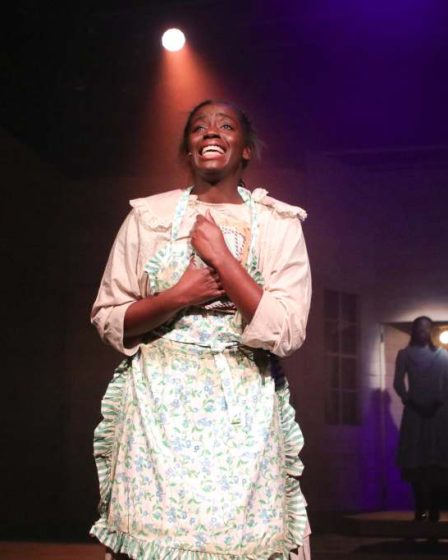
Sedos, London’s leading amateur theatre company, is breaking barriers with its latest production of The Color Purple, marking the first all-Black cast and creative team in its 119-year history. Directed by Tasha Msanide and backed by a talented team of cast and creatives, this production is a joyful celebration of Black creativity and representation in musical theatre.

The story

Based on Alice Walker’s Pulitzer Prize-winning novel, The Color Purple tells the story of Celie, an African-American woman who endures a life of suffering; including racism, abuse and the separation from her sister, Nettie. The challenges continue when Celie is married off to a domineering Mister who further torments her. Celie develops close relationships with women such as the confident & independent Sofia and glamorous singer, Shug Avery, who teach Celie valuable life lessons.

Photo by Ben Copping

The Color Purple delves into themes of resilience, self-discovery, queer love, and redemption while highlighting the enduring strength of women, and the power of community. Having only read the book, I eagerly anticipated what the musical adaptation would have in store – and it turned out to be one of the most powerful shows I have watched.

My thoughts

Set in the early 20th-century American South, the hair and costume design perfectly encapsulates this era, along with the musical genres. The music is a blend of blues, jazz, and gospel, perfectly capturing both the era and emotion of this story. There were powerful ballads and upbeat numbers like Shug Avery’s introductory number ‘Push Da Button’

Photo by Ben Copping

The staging made full use of the theatre’s intimate space and I was impressed with the seamless transitions between scenes. The direction and choreography were carefully thought out, adding fluidity to the storytelling and keeping it at a good pace.  Ruth Luckin’s atmospheric lighting heightened the show’s emotional impact, from the shadows evoking danger and isolation to the radiant purple hues that illuminated Celie during moments of hope. It was subtle yet a significant creative choice.

Photo by Ben Copping

Now, I must talk about the phenomenal cast! Their performances were the heart and soul of the production. It felt like we were watching a cast of seasoned professionals; the talent on that stage was astounding!  Their vocal prowess was unmatched—truly some of the finest I’ve heard in musical theatre. Afope Rachelle Ojomo delivered a standout performance in the role of Celie. Their breathtaking rendition of ‘I’m Here’ was a highlight of the show, with the audience immediately erupting into applause. Ojomo’s ability to act through song was fantastic – the performance was raw, genuine and, honestly, transformative – no notes!

 Alongside Ojomo, Josephine Bannerman stars as Nettie – I loved their voices together! Those beautiful, sisterly moments made their separation all the more heartbreaking. Shug Avery, played by Michaella Moore, was utterly charming. Moore embodied glamour and had the most charismatic stage presence! Moore also brought incredible depth to the character as we saw a more vulnerable Shug in Act 2.

Photo by Ben Copping

The lively ensemble also deserves recognition. The gossiping trio, (Marnette Renee Bennett, Zahra Jennings-Grant and Lashayah AlizĂš Byfield) had sensational vocals and sharp wit as they provided light-hearted narration throughout. Sofia (played brilliantly by RinrĂš Olusola) and her husband Harpo (Dupri Mckoy) were a great duo with plenty of humour and romantic clashes (The Squeak v Sofia showdown had us cracking up!đŸ€Ł)

Photo by Ben Copping

The show is not without its tough moments. The abuse and injustice the characters face for being Black is difficult to watch yet the production handles this with sensitivity and care.  

What truly stood out was the sense of camaraderie and community among the cast. There was an undeniable warmth and authenticity in their interactions, making the production feel alive! Sedos has achieved something remarkable with this production of The Color Purple. With fantastic performances, thoughtful direction and an abundance of energy, this was a moving and inspiring piece of theatre that I am grateful to have watched.

Congratulations to the entire cast & creative team! đŸ’œ

For more information about Sedos London, check out their website and upcoming productions here

Posted on Leave a comment

REVIEW: Why A Black Woman Will Never Be Prime Minister – Camden People’s Theatre

🎭Why A Black Woman Will Never Be Prime Minister
📍Camden People’s Theatre
đŸŽŸïžPR invite

⭐⭐⭐⭐⭐

Zakiyah Deen’s debut play delves into intersectionality, British politics, and Black women’s maternal health, addressing uncomfortable truths through satire and spoken word. It’s timely, important and a brilliant production!

The story

The play follows nineteen-year-old Shanice LaybĂĄ (Zakiyyah Deen) as she navigates the tricky and treacherous worlds of university and politics. Shanice, passionate about poetry, reading and determined to do well, begins her first year at university and lands an internship role as an Executive Assistant to high-profile politician, John Gainsborough (Ryan Whittle). Over nine months, we watch Shanice’s journey as she juggles her studies, her internship, and her health. The show brilliantly captures the struggles and challenges Black women face, particularly within healthcare and the political climate. As Shanice provides much of the unacknowledged labour in John’s office and his community engagements, the question echoes: Why can’t a Black woman be Prime Minister?

Photo by Ali Wright

My thoughts

Written and performed by Zakiyyah Deen, their debut play is packed with satire, spoken word and vivid storytelling that engages us right from the beginning. Deen’s writing is both powerful and rich in poetic cadence. The words flow effortlessly, direct and unflinching as it confronts uncomfortable truths and the harrowing statistics of Black maternal healthcare.

Kelechi Okafor’s direction strikes the perfect balance between humour and serious tones, ensuring the show never loses its rhythm. It’s a testament to Zakiyyah Deen’s versatile performance that the play manages to move so seamlessly between laugh-out-loud moments and heavy, thought-provoking commentary. Deen delivers a strong performance; I was so impressed with how they commanded the stage, embodying a range of characters with sharp wit and physical comedy. Deen sustains the audience’s attention throughout the entire production, with energy and precision.

Jahmiko Marshall’s atmospheric lighting design heightens the intensity of key moments, especially during Shanice’s monologues as dims to reflect her growing inner turmoil. I also loved the lighting cues during the hilariously accurate Question Time segment, which had the audience in stitches.

Photo by Ali Wright

Whittle’s portrayal of John, the bumbling politician, is an uncanny resemblance to a former prime minister, evoking plenty of laughs from the audience. Having worked in local government myself, I couldn’t help but giggle at the scenes where John attempts to engage with the community in an awkward, slightly out-of-touch manner. The scenes with John and Shanice are often where the satire sharpens; those uncomfortable microaggressions and stereotypes make the audience sigh in recognition.

Throughout the show, text projected onto the wall answers the title question, reminding us why society might believe a Black woman could never lead as Prime Minister. These words serve as a subtle transition between scenes, guiding the story while providing critical context for Shanice’s experiences.  Deen’s play articulates themes I haven’t seen in on a theatre stage before. It feels authentic, insightful and provokes essential discussion.

Photo by Ali Wright

Why A Black Woman Will Never Be Prime Minister explores intersectionality – specifically how Black women experience discrimination in the political and healthcare systems. Through Shanice’s journey, the audience sees the layered racial and gender biases she faces, which mirrors the harsh realities of society today. I’m so thankful to have witnessed a production so challenging and moving. Zakiyyah Deen has crafted a powerful piece that doesn’t just entertain—it educates and enlightens!

The show is playing at Camden People’s Theatre until 9 November!

Posted on Leave a comment

NEWS: New Cast of ‘For Black Boys Who Have Considered Suicide When The Hue Gets Too Heavy’ announced.

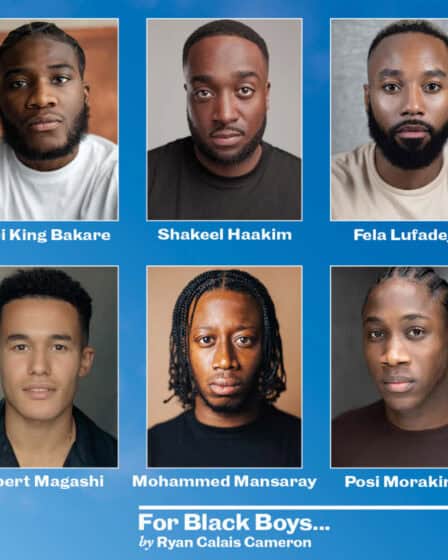
Today, the Royal Court Theatre and Nimax Theatres welcomes six new cast members to the For Black Boys family. Starring in the iconic roles of Onyx, Pitch, Jet, Sable, Obsidian and Midnight are a powerful new blend of talented actors including Tobi King Bakare, Shakeel Haakim making his professional debut, Fela Lufadeju, Albert Magashi, Mohammed Mansaray and Posi Morakinyo respectively.

The brand-new ensemble will be directed by Ryan Calais Cameron. The six will bring their own interpretation and lived experiences to their respective roles, infusing a fresh dynamic and energy to this transformative theatrical experience which uniquely mixes music, movement, storytelling and verse.

Writer Ryan Calais Cameron was inspired by Ntozake Shange’s seminal work For Colored Girls Who Have Considered Suicide / When the Rainbow Is Enuf. For Black Boys Who Have Considered Suicide When The Hue Gets Too Heavy is located on the threshold of joyful fantasy and brutal reality where six men clash and connect in a desperate bid for survival.

About the new cast Ryan Calais Cameron, writer and Nouveau Riche Artistic Director, said:
“The themes explored in the play are timeless, and I am genuinely thrilled about the prospect of witnessing the new cast infuse their own unique energy and brilliance into the production. Each member brings a wealth of talent and dedication to their roles, and I am confident that their interpretation will breathe new life into the narrative.”

You can book tickets to For Black Boys Who Have Considered Suicide When The Hue Gets Too Heavy here.

Posted on Leave a comment

REVIEW: Brenda’s Got A Baby – New Diorama Theatre

🎭 Brenda’s Got A Baby
📍New Diorama Theatre
đŸŽŸïž PR invite
⭐⭐⭐⭐

Jessica Hagan’s new comedy play heads to New Diorama Theatre for an entertaining and insightful production on Black womanhood, sisterhood, motherhood and…babies!

The story

Following an unforeseen breakup with her long-term boyfriend, Dami (Jordan Duvigneau) and feeling constantly overshadowed by her happily married younger sister, 29-year old Ama (Anita Uwajeh) sets out on a quest to embrace motherhood. Ama has made great achievements including securing her own home and a successful career, but as she approaches her late twenties, she believes the missing piece in her life is a child.

Ama navigates a rollercoaster ride that includes grappling with a shortage of available Black sperm donors, confronting a racially biased healthcare system, and dealing with her own demanding family. Still, Ama charges ahead with determination. Along the way, she finds herself entangled in awkward encounters, even more awkward conversations and defiant decisions. With the clock ticking, Ama’s sense of urgency only intensifies.

Photo by Cesare De Giglio

My thoughts

The show opens with sisters, Ama and Jade (Jahmila Heath), as Ama delivers a scathing commentary on a peer’s fifth pregnancy. Together, the two light up the stage with their quick wit and humour, setting the tone for the show. As they listed all the societal pressures and expectations they were told as teenagers, I enjoyed watching their convincing sisterly bond. The show featured pop cultural and TV references, including a notable scene from The Real Housewives of Atlanta. While this had the audience immediately engaged, with some even reciting the scene, I found this to be a smart foreshadowing technique for the events to come. 

Brenda’s Got A Baby was jam-packed with jokes that had the audience in constantly laughing. Hagan’s script is razor-sharp, witty and performed wonderfully by the cast of 5. Whether it was Dami’s audacious attitude, Jade’s innocence or Skippy’s (Edward Kagutuzi) naive but charming nature, I found the characters incredibly fun to watch. They had such natural chemistry and charisma throughout.

Photo by Cesare De Giglio

Michelle Asante gave a strong performance as Ama’s mum, with the exaggerated facial expressions and hilariously outlandish remarks. I couldn’t help but wonder how this character was so identical to my own Ghanaian mother (bravo to the team!) The infusion of the Ghanaian dialect, Twi, added to her character’s charm. Anita-Joy was utterly brilliant in the role of Ama and displayed great stage presence. The character’s overly sarcastic demeanor worked well with Uwajeh’s seamless comedic timing. Among the hilarity, I adored the poignant scene between Asante and Uwajeh as they portrayed a beautiful, mother-daughter bond.

Photo by Cesare De Giglio

The jigsaw set design by TK Hay added a colourful and playful dimension to the story, reflecting Ama’s vibrant dynamics of her family, but also the inner thoughts of her fragmented life. As Act 2 peeled back the layers of Ama’s vulnerability, we also learn more about her younger sister, Jade’s, health. I wished this particular scene wasn’t so hysterical between the characters. Though various revelations come to light, Jade’s announcement felt hurried. This would have been a significant plot to the story and further discussion into black women and healthcare.

Khalil Madovi provided subtle shifts in sound whenever babies and marriage were mentioned to Ama. This conveyed a strong sense of isolation, a theme that unfolds throughout the play. Anastasia Osei-Kuffour’s direction paired incredibly well with Madovi’s distorted sound design, both effectively mirroring the disjointed pieces of Ama’s life. The relentless (and literal!) countdown, symbolizing a ticking body clock further added to her desperation. It’s quite a tough experience to watch as Ama frantically paces around the stage, undergoing questionable actions. Osei-Kuffour skillfully balances between the playful direction in Act 1 to the sombre Act 2, where coercive cracks begin to surface.

Photo by Cesare De Giglio

I appreciated the show for addressing the societal pressures women face. But also acknowledging the issues within black women’s maternal care and health, with the inclusion of statistics that I wasn’t even aware of! Jessica Hagan is a talented writer, and cleverly blends satire with sensitivity, ensuring that the humorous moments do not overshadow the serious undertones.

Brenda’s Got A Baby is a brilliant production, offering constant laughter, thought-provoking themes, and a cast that delivers a marvellous performance!

Brenda’s Got A Baby plays at New Diorama Theatre until 2 December 2023.

Access performances:

Captioned: Wednesday 22 November 2023 – 7:30pm

Relaxed: Thursday 16 November 2023 – 7:30pm

Babes-in-Arms: Thursday 16 & Thursday 30 November – 2pm

Posted on Leave a comment

Family Tree – Brixton House Theatre

🎭 Family Tree
📍 Brixton House Theatre
đŸŽ« Gifted
⭐⭐⭐

Mojisola Adebayo’s play, ‘Family Tree’, brings to light a dark history of the scientific world. 

Directed by Matthew Xia, the powerful drama is told through a blend of spoken word, interpretive dance and harrowing historical truths about race, health, the environment and the forgotten legacy of Henrietta Lacks – a Black woman whose influence on modern-day medicine is extraordinary. 

The story

The story is inspired by Henrietta Lacks, an African American woman who died in 1950s Maryland from cervical cancer. Before she passed, doctors took samples from Lacks’ biopsy during the treatment, sharing them with researchers who discovered her cells had the capacity to survive and reproduce. This created the HeLa cell line, which was (and still is) involved in medical research in cancer, immunisations, HIV and most recently, vaccines against COVID-19. Despite saving thousands of lives, Henrietta did not have any knowledge or consent over the actions, nor did her family years after her death. 

‘Family Tree’ is a thought-provoking play that unpacks the injustices Black women faced in medical care over the years. Adebayo’s intertwines historical stories of enslaved women in America, subject to cruel experiments by white medical staff. We also see a trio of Black women play present-day NHS nurses, passionately discussing racism in healthcare, among professionals and patients, ‘WHY’ people and the Black Lives Matter movement.

My thoughts

Aminata Francis plays Henrietta Lacks, opening the show with a powerful, rhythmic monologue as an immortalised being. Francis’ presence is captivating; I admired their strong storytelling as they glided barefoot across the stage, delivering Adebayo’s poetic script with deep emotion. 

Photo by Helen Murray

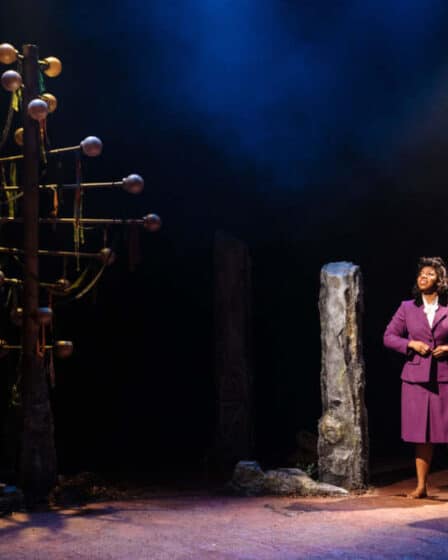
 Mofetoluwa Akande, Keziah Joseph, and AimĂ©e Powell play the trio of women, and were strong in their individual roles, seamlessly transitioning between the contrasting characters. I also loved how they tended to one another’s hair during their scenes as NHS nurses. Throughout the show, a smoking cowboy (Alistar Hall) sinisterly walks across Simon Kenny’s set, presumably embodying a version of the ‘Marlboro man’ and also death.

As we weave between the different generations, I admittedly struggled to find the plot. The play could have benefitted from a longer run time as there was a lot of information packed into this 90-minute piece. The poetry and prose were beautiful, but the scenes swiftly moved on to the next. I wished there was time for Adebayo’s writing to linger and let us reflect. This was expedited during the final scenes with the appearance of Oshun, the Yoruba goddess of water, fertility and love. Whilst Akande’s performance in this role was enjoyable, it felt out of place and almost rushed as the play was nearing the end.

Photo by Helen Murray

‘Family Tree’ is both an important exploration and celebration of Black women’s contributions to healthcare and their undeniable strengths. The uncomfortable truths of racial inequalities over the years are revealed. From a personal viewpoint – I’m a Black woman living in the U.K., where these inequalities are still occurring, so parts of the show were difficult to hear. Nonetheless, I commend Mojisola Adebayo and Matthew Xia for creating a play that doesn’t shy away from revealing the harrowing, untold experiences of Black women as well as shedding light on Henrietta Lacks’ story.

I thoroughly enjoyed Diane Alison Mitchell’s movement direction, as the cast danced together in sync to an African drum beat. The joyous ending serves as a celebration of Henrietta Lacks’ legacy and generations of Black women.

Family Tree is playing at Brixton House Theatre until 23 April, before continuing its U.K. tour.

Posted on Leave a comment

Chicken Burger N Chips – Brixton House

🎭 Chicken Burger N Chips
📍 Brixton House
đŸŽ« Gifted
⭐⭐⭐⭐⭐

“The world wasn’t designed for us to succeed playboy, you gotta clock that we’re living in an uneven society.”


Written by Corey Bovell and directed by TD. Moyo, Chicken Burger N Chips is a fast-paced, witty play that tells a story about gentrification and the impact it’s having on the lives of its youths. 

Set in South London, Bovell has produced an authentic coming-of-age story, full of nostalgic references, notable music and the most upbeat performance.

The story

Summer holidays are here and 18-year-old Corey awaits his A-Level results. During his regular routine of hanging out in fast food chain, Morleys with the mandem, Corey meets Jodie, who makes him realise the changes occurring in the Lewisham borough. The more time spent together, Corey grapples with the notion of staying in ‘ends’ or leaving to pursue his dreams.

The play explores gentrification as Corey watches local Lewisham landmarks be demolished and replaced with flats, yoga mats & hipsters – leaving no shops, no markets, and no culture. 

A run-in with rivals further touches on the impact of gang violence and the fear and uncertainty this causes amongst young Black men. As a friend tells Corey that “we live in an uneven society”, Corey wonders what the future holds for him. 

Photo by Helen Murray

My thoughts

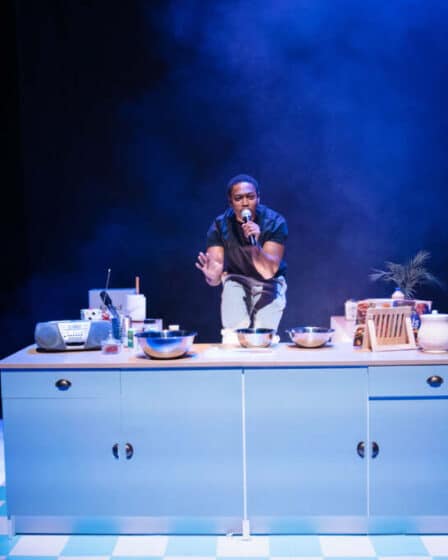
TD. Moyo creatively directs the performance with Corey (played by Gamba Cole) cooking fried chicken live on stage as shares his story. This was a fascinating directional choice from Moyo, that didn’t interrupt the flow of the play.

Allyson Julien’s set design accurately represented a family kitchen; photographs on the fridge, a noughties-looking stereo, Ainsley Harriot cookbooks and Dunn’s River seasoning on the counter. Cole utilises the entire space as he shares his adoration for Lewisham. He describes Morley’s as the ‘beacon of South London’, and it’s clear the food spot became a sanctuary for him and his friends. 

Photo by Helen Murray

Gamba Cole puts on a fantastic performance as Corey in this solo show. Cole oozed charisma and humour in the role, keeping the audience engrossed all throughout. 

Bovell’s writing is engaging, witty and sparks pure joy, which is exactly what Cole delivered. I laughed a lot during the performance, especially during the scenes in Morley’s. 

There was multi-roleplaying from Cole as he effortlessly transformed into different characters in the story. Cole impressively showcased a range of mannerisms. Each character portrayal felt relatable, adding even more depth to the story. Additionally, Ben Garcia’s seamless lighting design did well to indicate the transitions between characters. The show also featured musical interludes of various genres, and the audience couldn’t help but join in.

Photo by Helen Murray

Overall, Chicken Burger N Chips is captivating, filled to the brim with enthusiasm and joy. It’s incredibly moving as Bovell incorporates important themes throughout. At its core, the show is a celebration of South London. It also takes its time to explore issues teenagers face and the socio-economic impacts of gentrification in working-class areas in London.

As a Millenial that grew up in South London, eating Morley’s every other day after school, I am thankful that this play exists. I hope it returns for an even longer run on stage!

Posted on Leave a comment

I am not Black – Barons Court Theatre

🎭 I am not Black
📍 Barons Court Theatre
đŸŽ« PR invite
⭐⭐⭐⭐

Written and performed by Akin Wright, ‘I am not Black’ is a coming-of-age story, exploring one man’s plight of growing up in an environment where he was ‘‘too white for the black kids and too white for the white kids”. Directed by Joseph Junkere, this one-man show is funny, powerful and an honest exploration of the black experience.

The story

When Temz Thomas (Akin Wright) is invited by his former school to give a speech to current students, this sparks a trip down memory lane. As he finds an old Blackberry phone, Temz begins to reminisce of his experiences at school. He reveals the microaggressions and casual racism faced during that time and reflects on what it was like to feel as though he didn’t belong.

As Temz dresses in school uniform, he shares what it was like being at a private all-boys school, where he was one of few black students, and made to feel othered. Temz succumbed to the jokes about his race as well as the negative and ridiculous stereotypes about Black people. We also discover the jokes sadly continued outside of school, and in his church community.

My thoughts

Wright incorporates many colloquial phrases and cultural references that were all too familiar to me. Blackberry phones, Channel U, and even the CGP GCSE books sprawled on the floor took me back to my own younger years. The set design was simple but was enough to transport the audience back to Temz’s school days.

Racism is a key theme throughout the play, as well as belonging. It’s tough to hear, but I commend the script for being authentic and not diminishing the experiences many young black kids have faced.

Wright’s storytelling is engaging, and they successfully capture our attention for all 60 minutes. The writing is entertaining, quick-witted, and included so many nostalgic references that made me chuckle (The Blackberry battery hack was such a throwback!). There’s also a nice balance between the humour and the serious nature of the topic.  

I enjoyed the pacing of the show. Even with all the content and backstories, it didn’t feel rushed. There was multi-roleplaying from Wright, as they portrayed the supporting characters in Temz’s life. At times, it was difficult to keep up with the number of characters in the story. Wright did a great job at performing them all and I particularly liked the use of audio during conversations with other characters.  

The second half was the strongest, as we saw even more emotion from our protagonist. Temz lets out pent-up frustrations from the years of casual racism faced by his peers, teachers, and his own community. Under Jinkere’s powerful direction, we see Temz sit in the middle of the stage, lights dimmed, revealing a written wall of racial slurs and microaggressions. This was my standout and such a profound way to echo the stories Temz shared.

In an impassioned poem, Temz rightfully expresses that black people are not a monolith. We are unique. Personally, I am proud there are shows like ‘I Am Not Black’ that have the platform to share our unfiltered stories and experiences.

I am not Black’ is playing at Barons Court Theatre until 4 February. (Although tickets have sold out!)