Posted on Leave a comment

REVIEW: Limp Wrist and The Iron Fist – Brixton House

🎭 Limp Wrist and The Iron Fist
📍Brixton House
đŸŽŸïž Gifted
⭐⭐⭐⭐⭐

After a sold-out run during the 2024 Housemates Festival, Emmanuel Akwafo’s Limp Wrist and The Iron Fist has returned! The debut play is a captivating, funny and unflinchingly honest exploration of black queer identity.

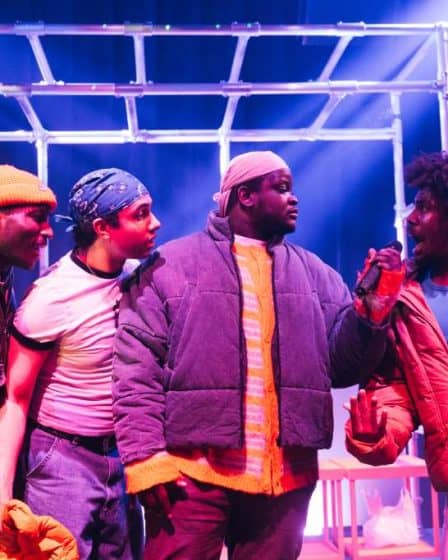
Set in London, the play follows 4 friends, Monday, Omari, Nathaniel and Joseph, as they prepare for a night out! As they wait at a bus stop, dancing, bantering and drinking miniature bottles of alcohol, deeper conversations unfold. The group embark on a journey of discovery and healing, as they open up about their sexuality, faith, and masculinity in a society that often tries to silence them.

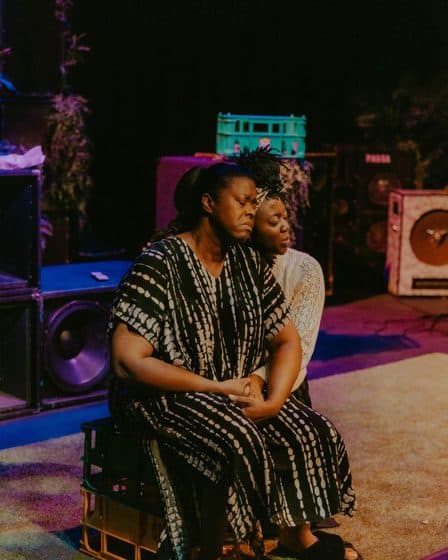
Photo by Helen Murray

Akwafo’s play is beautiful and authentic, particularly as it draws upon personal experiences, which makes it feel profoundly human. The writing includes plenty of witty and laugh-out-loud scenes, especially the dialogue between the characters. The show balances this with moments of vulnerability and hard-hitting revelations. The show sensitively handles its heavy themes, exploring how sexuality intersects with race, religion and masculinity. We are reminded that Black people and their experiences are not a monolith. The play is also a testament to the fact that Black queer stories can be joyful, complex and full of heart.

The talented cast, Prince Kundai, Romeo Mika, Tyler Orphé-Baker and Noah Thomas, showcased palpable chemistry. The dialogue was natural and truly captured the essence of friendship as they banter, bicker and support each other.

The production boasts a strong creative team. Nathaniel Campbell’s exuberant direction kept us fully engaged and the energy high. Especially when the cast jumped, climbed and vogued around the set. It worked well to highlight the characters’ playfulness. Pierre Flasse’s sound design featured harrowing echoes from the character’s past, while Jahmiko Marshall’s atmospheric lighting perfectly set the scenes. The warm, golden brown lighting during the sequence about Black nightlife was captivating. Paired with Annie-Lunnette Deakin Foster’s slick movement direction, this created a beautiful and liberating scene.

Photo by Helen Murray

Each character delivers a powerful and thought-provoking monologue about their experience, from religion, family expectations, to mixed heritage and coming out. ‘Limp Wrist and The Iron Fist’ recognises individuality and reminds us that these men are not defined by a single identity. The cast shine in their own way; from OrphĂ©-Baker’s warmth and optimism, to Thomas’s cheeky humour. Kundai brings an intense, almost ‘tough love’ attitude. Romeo Mika stands out as Joseph, the group’s newly ‘out’ friend, who sparks conversations with historical facts and dictionary definitions. Mika’s performance is pure and effortlessly charming, which makes a later revelation even more heartbreaking.

Photo by Helen Murray

I wish there were a slightly longer runtime to add depth to each character’s journey, and also the room for the audience to reflect. Still, Limp Wrist and the Iron Fist remains a powerful, unapologetically Black and queer story. It celebrates friendship and encourages us to embrace our full, authentic selves.

Brixton House continues to be an important space for platforming real stories and lived experiences from underrepresented communities.

Limp Wrist and The Iron Fist is not one to miss – you can catch it at Brixton House until 29 November.

Posted on Leave a comment

Family Tree – Brixton House Theatre

🎭 Family Tree
📍 Brixton House Theatre
đŸŽ« Gifted
⭐⭐⭐

Mojisola Adebayo’s play, ‘Family Tree’, brings to light a dark history of the scientific world. 

Directed by Matthew Xia, the powerful drama is told through a blend of spoken word, interpretive dance and harrowing historical truths about race, health, the environment and the forgotten legacy of Henrietta Lacks – a Black woman whose influence on modern-day medicine is extraordinary. 

The story

The story is inspired by Henrietta Lacks, an African American woman who died in 1950s Maryland from cervical cancer. Before she passed, doctors took samples from Lacks’ biopsy during the treatment, sharing them with researchers who discovered her cells had the capacity to survive and reproduce. This created the HeLa cell line, which was (and still is) involved in medical research in cancer, immunisations, HIV and most recently, vaccines against COVID-19. Despite saving thousands of lives, Henrietta did not have any knowledge or consent over the actions, nor did her family years after her death. 

‘Family Tree’ is a thought-provoking play that unpacks the injustices Black women faced in medical care over the years. Adebayo’s intertwines historical stories of enslaved women in America, subject to cruel experiments by white medical staff. We also see a trio of Black women play present-day NHS nurses, passionately discussing racism in healthcare, among professionals and patients, ‘WHY’ people and the Black Lives Matter movement.

My thoughts

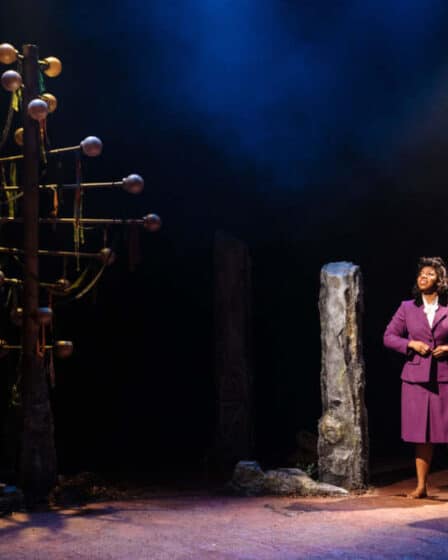
Aminata Francis plays Henrietta Lacks, opening the show with a powerful, rhythmic monologue as an immortalised being. Francis’ presence is captivating; I admired their strong storytelling as they glided barefoot across the stage, delivering Adebayo’s poetic script with deep emotion. 

Photo by Helen Murray

 Mofetoluwa Akande, Keziah Joseph, and AimĂ©e Powell play the trio of women, and were strong in their individual roles, seamlessly transitioning between the contrasting characters. I also loved how they tended to one another’s hair during their scenes as NHS nurses. Throughout the show, a smoking cowboy (Alistar Hall) sinisterly walks across Simon Kenny’s set, presumably embodying a version of the ‘Marlboro man’ and also death.

As we weave between the different generations, I admittedly struggled to find the plot. The play could have benefitted from a longer run time as there was a lot of information packed into this 90-minute piece. The poetry and prose were beautiful, but the scenes swiftly moved on to the next. I wished there was time for Adebayo’s writing to linger and let us reflect. This was expedited during the final scenes with the appearance of Oshun, the Yoruba goddess of water, fertility and love. Whilst Akande’s performance in this role was enjoyable, it felt out of place and almost rushed as the play was nearing the end.

Photo by Helen Murray

‘Family Tree’ is both an important exploration and celebration of Black women’s contributions to healthcare and their undeniable strengths. The uncomfortable truths of racial inequalities over the years are revealed. From a personal viewpoint – I’m a Black woman living in the U.K., where these inequalities are still occurring, so parts of the show were difficult to hear. Nonetheless, I commend Mojisola Adebayo and Matthew Xia for creating a play that doesn’t shy away from revealing the harrowing, untold experiences of Black women as well as shedding light on Henrietta Lacks’ story.

I thoroughly enjoyed Diane Alison Mitchell’s movement direction, as the cast danced together in sync to an African drum beat. The joyous ending serves as a celebration of Henrietta Lacks’ legacy and generations of Black women.

Family Tree is playing at Brixton House Theatre until 23 April, before continuing its U.K. tour.