Posted on Leave a comment

INTERVIEW: Not Your Superwoman – Emma Dennis-Edwards, Letitia Wright and Golda Rosheuvel

Emma Dennis-Edwards’ powerful new play, Not Your Superwoman, heads to Bush Theatre for its world premiere. Directed by Lynette Linton, the play explores the emotional aftermath of a family matriarch’s death. Acclaimed actors, Golda Rosheuvel and Letitia Wright, portray mother and daughter, Joyce and Erica, who find themselves grappling with uncertainty and inherited patterns. 

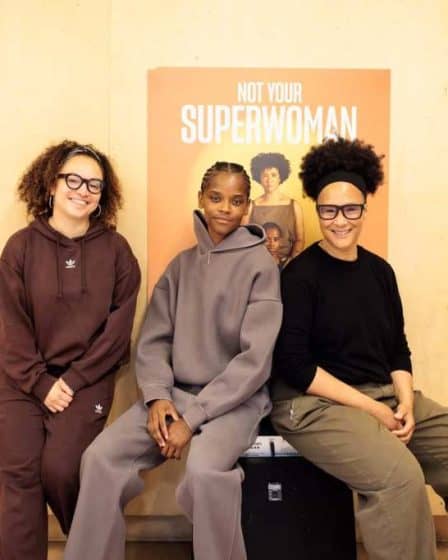
I had the wonderful opportunity to attend the rehearsals and discover more about the play. I met with playwright Emma Dennis-Edwards, Golda Rosheuvel and Letitia Wright to talk about the play, inspirations and why they believe people should see the show!

What inspired you to create a play about intergenerational dynamics?

Emma: When Lynette and I were talking about doing something around Black women and mental health, I was thinking, how many of my Black women friends are seeing therapists and unlocking some of the ancestral nature of the trauma that we’re carrying as Black women. A lot of that comes from those maternal relationships. I really wanted to do something that looks at that dynamic.

I think quite a lot of the Black British cannon, rightfully so, focuses on fatherhood and I was like ‘let’s really talk about the mums, about those relationships. That’s where the intergenerational idea of creating this play came from.’

Emma Dennis-Edwards (photo by Tyler Fyose)

Did you face any challenges when writing such an intimate, emotionally charged story?

Emma: Yeah. The Caribbean in me is like, ‘why you chatting my business?’. This is the most personal piece of work that I’ve done in my career. Also, there’s a responsibility – because in that room with Golda, Letitia and Lynette, we’ve shared and brought quite a lot. There’s a level of responsibility because I’m holding their stuff as well within this play.

I was talking to our dramaturg, and felt I put too much of myself [in the play]. But it’s fine – it’s a shared story, it’s our story, a story for us, by us.

You’re known for powerful, screen performances. What excited you about returning to the stage?

Golda: What it speaks to. The people involved. I was looking for something I was interested in exploring – mental health, trauma, especially in the guise of Black women. I’ve been sent a lot of plays, but they didn’t speak to me.

What’s important in this project is the people involved in it. Talking and engaging with Lynette Linton’s excitement and enthusiasm for telling Black stories is something that drew me to this play, and this building and this project. I hadn’t seen one single word on the page, but through discussions and joint understanding of storytelling, and the need for Black stories to be put on stage, I was in, 100%.

Golda Rosheuvel and Letitia Wright (photo by Tyler Fyose)

Letitia: Film is good, you have maybe 2 weeks, a month to prep and learn your character. In theatre, it’s hard. You need to know the full play, all the beats, the moments, props. It’s a completely different ball game. I love both, but the difference is what’s required of you.

Theatre is like, you’re right there, I can’t hide, you’re going to see everything, feel everything, hear everything. It’s exciting! Once the stage lights go green, you’re just on. Anything can happen, you want the best to happen – you can laugh at different things and moments. The objective is always the same – whether it’s film, or TV, or theatre – is just to tell the truth. To leave something of purpose in our work.

Letitia on how she relates to the show and character, Erica:

Letitia: I wanted to do something about Black women, mental health and traumas. A play that we can all relate to. Especially the whole concept of not being a superwoman. That whole concept that plagues us, we wanted to dissect it and see what that looks like. I relate with the characters and the themes a lot.

For the first time, there is a play where I don’t have to imagine myself in a situation. Maybe there are a few elements I haven’t gone through, I won’t share, but you will discover it when you come to see the play. but everything else in the play I’ve lived it, I’ve experienced it, I know what it feels like. I relate to it a lot. I hope that other women relate to it too and feel healed once they’ve seen it.

Lynette Linton and Golda Rosheuvel (photo by Tyler Fyose)

What would you like audience to take away from the show?

Emma: Healing and healing parts of yourself. I mean, it’s one of the harshest lessons a Black woman you come to. I’ve got to really find that peace, that healing, all that stuff, myself in a world that is not set up for us to do that. I hope this play offers that.

Before we wrapped up, I asked some quick-fire questions:

Describe the show in 3 words

Emma: Funny, Black, Caribbean!
Golda: Buzzy, emotional and epic!
Letitia: Passionate, healing, hilarious!

What was the first show that made you fall in love with theatre?

Golda: Probably The Nativity in church!

Emma: Gone Too Far – Bola Agbaje

Letitia: Sucker Punch – Roy Williams

Lastly, why should people come and watch ‘Not Your Superwoman’?

Golda: Because it’s a good night out. And you’re going to learn a lot of stuff about yourself and the world.

Not Your Superwoman plays at Bush Theatre from 8 September – 1 November 2025.

Posted on Leave a comment

REVIEW: Shifters – Bush Theatre

🎭 Shifters
📍 Bush Theatre
🎟️ PR invite
⭐⭐⭐⭐

Bush Theatre continue impress with their latest production from Benedict Lombe. 

‘Shifters’ is a beautiful and honest, exploration of young love, memory, and destiny. We meet Destiny and Dream (Heather Agyepong and Tosin Cole), childhood friends who reconnect after years apart. Now, aged 32, Des and Dre are living the dream in their respective careers. But a tragedy brings them together for the first in 8 years, and the memories come flooding back. The play shifts between pivotal moments in Des and Dre’s lives – from the moment they met at 16 in debate class to the challenges they faced in adulthood.

Written by Benedict Lombe, winner of the Susan Smith Blackburn Prize for Playwriting, the play is authentic, and poetic as it delves into the complexities of relationships. I adored how Lombe’s writing acknowledges the vulnerability we exude when it comes to love. Throughout this powerful two-hander, we watch Des and Dre navigate their friendship-turned-relationship, through affecting moments. 

Lombe sensitively incorporates the impact of grief and trauma on Des and Dre’s relationship, but also the heavy burden Des carries in regards to being a Black woman. This was something I and members of the audience audibly agreed on as Des emotionally described how society interacts with Black girls. 

The story makes us question whether the ‘right person, wrong time’ is true and if soulmates do exist (I believe they do!).

Photo by Craig Fuller

Tosin Cole and Heather Agyepong take to the stage with undeniable chemistry. The dialogue between them is pacy, and filled with playful jokes that double up as flirtatious. They banter about African parties, the school’s debate club, and Nigerian vs Congolese music. I found myself smiling numerous times at their exchanges and how real the performances were. My memorable moment was Des tending to Dre’s hair; this simple yet profoundly intimate moment beautifully showed the bond between the pair. That soft, playfulness remains even years after they last met. 

Agyepong’s Des is self-assured and full of sharp wit, while Cole is the epitome of cool, calm and collected, even in moments of sadness. Cole and Agyepong deliver the most captivating performances I’ve seen in a romantic play. Even during quieter moments, their passion speaks volumes. Directed by Lynette Linton, there is a playful energy between our two leads. The non-linear structure flows naturally, revealing layers of Des and Dre’s relationship with each passing year.

Photo by Craig Fuller

Alex Berry transforms the main space with a minimalist traverse staging, while Neil Austin’s stunning lighting illuminates the stage. The lighting is visually striking as we walk into the theatre and throughout the show, these lights effectively capture the shifting timelines in the story. The bold hues of greens and reds during Des and Dre’s youthful years, become dimmer as we move to present-day. I would have loved a solid conclusion to round off the story, but perhaps the ending was meant to be ambiguous.

The show is a powerful reminder of our experiences with long-term connections, and will leave audiences utterly moved. With stellar performances and evocative storytelling, Lombe’s play balances humour and heartbreaking scenes, and altogether is an authentic portrayal of young love. Shifters is another example of Bush Theatre continuing to share new, powerful and diverse stories!

Shifters plays at Bush Theatre until 30 March 2024.